
Today, architectural lighting has become an essential part of how buildings look and feel. With modern LED lighting and smart control systems, designers can now make spaces look more eye-catching. These technologies highlight the space’s shapes and create an appealing atmosphere. But how does this LED lighting actually work with DMX? Don’t know? Worry not! This guide on architectural LED lighting and DMX solutions will explain everything in the simplest terms. You will understand how these lights work and how DMX controls them, so let’s get started!
What Is Architectural LED Lighting?
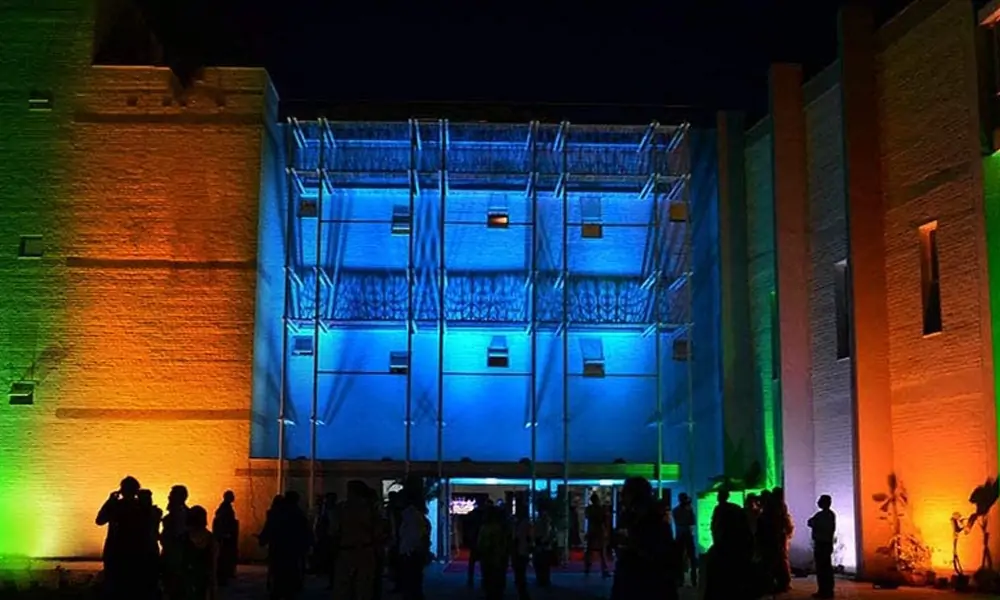
Architectural LED lighting is a type of lighting that highlights the look of buildings and structures using LED lights. It focuses on highlighting the beauty, shape, and design of a structure. These LED lights are energy-saving, long-lasting, and can create many colors and effects.
Remember, architectural LED lighting is not just about lighting up a place so people can see. Instead, it is used to make a space look beautiful. Designers use these lights to highlight key elements of a building, such as walls, pillars, walkways, or special features. It helps guide people’s eyes to the parts that look interesting and creates an attractive mood.
Another essential part of architectural LED lighting is customization. Actually, these lights can change color, brightness, and patterns. This flexibility allows designers to match the lighting to different events, seasons, or themes. This lighting can also be used to match a brand’s colors or create a specific mood.
What is DMX In Architectural LED Lighting?
DMX stands for Digital Multiplex. It is a system for controlling LED lights in architectural lighting. You can think of it as a remote control, but for many lights at once. Instead of turning each light on or off individually, DMX lets you control hundreds of lights simultaneously. Simply put, DMX allows the creation of different colors, brightness levels, and effects.
But how does a DMX actually work? Actually, DMX works by sending digital signals from a controller to the lights. Each light has its own unique “address,” so it knows exactly what instructions to follow. For example, one light can turn red. At the same time, another light turns blue, or a light can fade from bright to dim. This enables the creation of synchronized lighting effects for architectural projects.
How DMX Works: Key Components of a DMX Lighting System
To better understand DMX, let’s discuss the parts that work together to control architectural LED lighting.
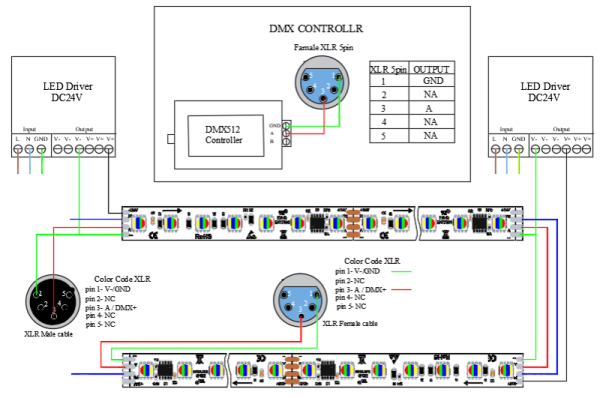
- DMX Controller: The DMX controller is the “brain” of the system. It sends instructions to all the lights, telling them what color, brightness, or pattern to display. Controllers can be simple hardware devices or software programs on a computer or tablet.
- DMX Cables: DMX cables are special cables that connect the controller to the lights. They carry the digital signals from the controller to each LED light.
- DMX Fixtures (LED Lights): These are the LED lights themselves. These lights receive the signals from the controller. In architectural lighting, these fixtures can be wall washers, floodlights, strip lights, or neon lights.
- DMX Terminator: A DMX terminator is a small device placed at the end of the cable chain. It prevents signal interference and ensures that all lights receive the correct instructions.
Why Combine Architectural LED Lighting with DMX Control?
As I said above, designers now actively combine architectural LED lighting with DMX solutions. But why? This combination primarily provides creativity and control. But that’s not all! Let’s find some main reasons why you should combine architectural lighting with DMX.
1- Full Control of Lights
With DMX, you can control each LED light individually. It means you don’t have to turn a light on or off. Instead, you can decide exactly how bright it should be, what color it should show, and when it should change. You can also group lights so they all do the same thing, or make each light act differently. This control allows you to create patterns, shapes, and effects that follow your imagination.
2- Dynamic & Creative Effects
Combining LED lights with a DMX system allows you to create dynamic lighting effects. Those creative lighting effects change over time rather than staying the same. It means lights can move, fade, flash, or change colors automatically. These effects make spaces feel more exciting and alive. Instead of plain static lighting, dynamic effects add a sense of motion and energy. Even designers can create color patterns, moving waves, and more to enhance aesthetic appeal.

3- Energy Efficiency & Longevity
One big reason for combining architectural LED lighting with DMX is energy efficiency and longevity. How? Actually, LED lights use much less electricity than traditional bulbs, and they produce very little heat. It means they are cheaper to run and safer for long-term use. Using DMX adds even more efficiency. With DMX, you can dim lights, turn off certain areas, or schedule effects so that electricity is only used when needed.
For example, lights can be brighter during an event. After that, you can turn off or dim the LED lights at night when fewer people are around. This helps reduce energy costs and makes the system more environmentally friendly. LED lights also have a long lifespan, often lasting tens of thousands of hours. This reduces maintenance, as you don’t have to replace bulbs as frequently.
4- Easy to Program & Customize
One of the best things about combining LED lights with a DMX system is that it’s very easy to program and customize. Designers can set up lighting sequences, color changes, and brightness levels. It means you don’t need to adjust each light manually. Instead, everything can be controlled automatically.
With DMX, you can also create different moods or effects for various occasions. You can even program the lights to slowly fade, flash, or move in patterns for an exciting look. This flexibility also allows for creative experimentation. You can try different color combinations and brightness levels until you achieve the perfect look. Once programmed, the lights will repeat the effects consistently without any extra work.
5- Scalable for Any Project Size
Another great reason to combine LED lighting with a DMX system is that it is scalable. It means it can work for projects of any size. Whether it’s a small room, a shop, a home, or a large building or stadium, DMX can easily control a few lights or thousands of lights. This scalability makes it very flexible.
You can start small and expand later without replacing the entire system. DMX also allows you to control multiple lights at once or individually. So, it’s perfect for both small decorative setups and large, complex architectural projects. You can maintain synchronization and lighting effects, no matter how many are installed.
DMX Solutions for Architectural LED Lighting
Architectural LED lighting comes in different types, each with a specific purpose. Designers choose the type depending on the space, effect, or mood they want to create. So, let’s discuss the most standard architectural LED lights and their features.
1- DMX LED Wall Washers
LED wall washers are the most common type of lights used in architectural lighting. These lights are designed to evenly illuminate large walls or surfaces with a bright, smooth glow. Instead of shining a single point of light, wall washers spread light across the whole wall. This makes the building look more welcoming.

These lights are popular in architectural lighting because they can make a plain wall look impressive at night. For example, a hotel or shopping mall can use LED wall washers to highlight the entire facade. One great feature of LED wall washers is that they can smoothly change colors. Using DMX controllers, designers can make walls shift from one color to another. It means they can create matching themes for festivals or special occasions.
2- DMX LED Floodlights
LED floodlights are powerful lights designed to illuminate large areas or tall structures. Unlike wall washers that spread light across a wall, floodlights produce an intense, focused beam. As a result, they can cover a wide area with soft, even brightness. Floodlights are commonly used in outdoor architectural projects. For example, for stadiums, parks, parking lots, bridges, or building facades, LED floodlights are ideal.

They make big spaces look safe, visible, and impressive at night. One significant advantage of LED floodlights is their energy efficiency and long lifespan. Traditional floodlights use a lot of electricity and get very hot. But LED floodlights stay cool and use less power, requiring fewer replacements. Moreover, LED floodlights are also DMX-controlled. It means they can change colors or create dynamic lighting effects. This makes them ideal for dramatic lighting effects.
3- DMX LED Strip Lights
LED strip lights are thin, flexible strips with small LED lights along their length. Due to this design, LED strips can be easily bent, cut, and installed in many places. It makes them very versatile for both indoor and outdoor architectural lighting. LED strip lights are often used for accent or decorative lighting. For example, they can be placed under stairs, along the edges of walls or ceilings, or around shelves.

In simple words, when you want to highlight any space border, LED strip lights are the perfect choice. One of the best features of LED strip lights is their flexibility and customization. They come in different lengths, colors, and brightness levels. Some strips can even change colors and patterns when connected to a DMX controller. As a result, LED strip lights are easy to use and create mood lighting or dynamic visual effects.
4- DMX LED Neon Lights
LED neon lights are flexible, bright lights that look like traditional neon tubes. However, these neon lights use modern LED technology. What makes LED neon lights stand out in architectural lighting is that they can bend into shapes, letters, or designs. So designers can use them in different patterns for decorative and artistic lighting. LED neon lights are often used for signage, borders, and creative accents.

For example, businesses can use them to create colorful signs. However, designers can outline windows, doors, or ceilings to make a space visually attractive. LED neon lights are also highly customizable. They come in various colors, thicknesses, and brightness levels. With a DMX controller, they can even change colors, flash, or create animated effects.
Frequently Asked Questions
Can LED architectural lighting work with timers?
Yes, LED architectural lighting can work with timers. You can easily connect them to simple plug-in timers or advanced digital timers. This helps you turn the lights on and off automatically, saving energy in the long run.
Can I sync LED lights with music using DMX?
Yes, you can sync LED lights with music using DMX. You need a DMX controller or software that supports sound-activated modes. The controller reads the music beats and sends commands to the lights. As a result, the LED lights change colors and patterns in sync with the sound.
Can DMX control different areas separately?
Yes, DMX can control different areas separately. DMX can control different areas separately by giving each area its own channel number. This way, you can control one area’s brightness, color, or effects without affecting another area.
Conclusion
The architectural LED lighting system is truly transforming how we light buildings and spaces. It’s all about creating moods, highlighting designs, and making spaces look modern. However, when you combine it with DMX, you get endless lighting effects and efficiency. For example, with LEDs, you get energy-efficient, long-lasting lighting.
However, with DMX, you get complete control, dynamic effects, and the freedom to program lights exactly how you want. Together, they make any space more attractive and eye-catching. In simple words, LED lighting with DMX gives beauty, control, and creativity. It helps turn ordinary spaces into memorable and impressive ones. That’s why it has become a top choice for modern architectural lighting.