
An LED strip makes any space look bright and beautiful. But what if you want more than just one color and want the lights to change colors at the same time? This is where an addressable LED strip comes into the scene. However, when you go to buy these LED strips, you will come across terms like RGB, RGBW, WS2812B, WS2815, 5V, 12V, LED density, pixel, and IC. All of this can feel confusing if you are new to addressable LED strips. But there is no need to worry! This complete guide to addressable LED strips will make things easier for you. I will discuss what they are, how they work, their uses, types, and more. So let’s get started.
What Is an Addressable LED Strip?
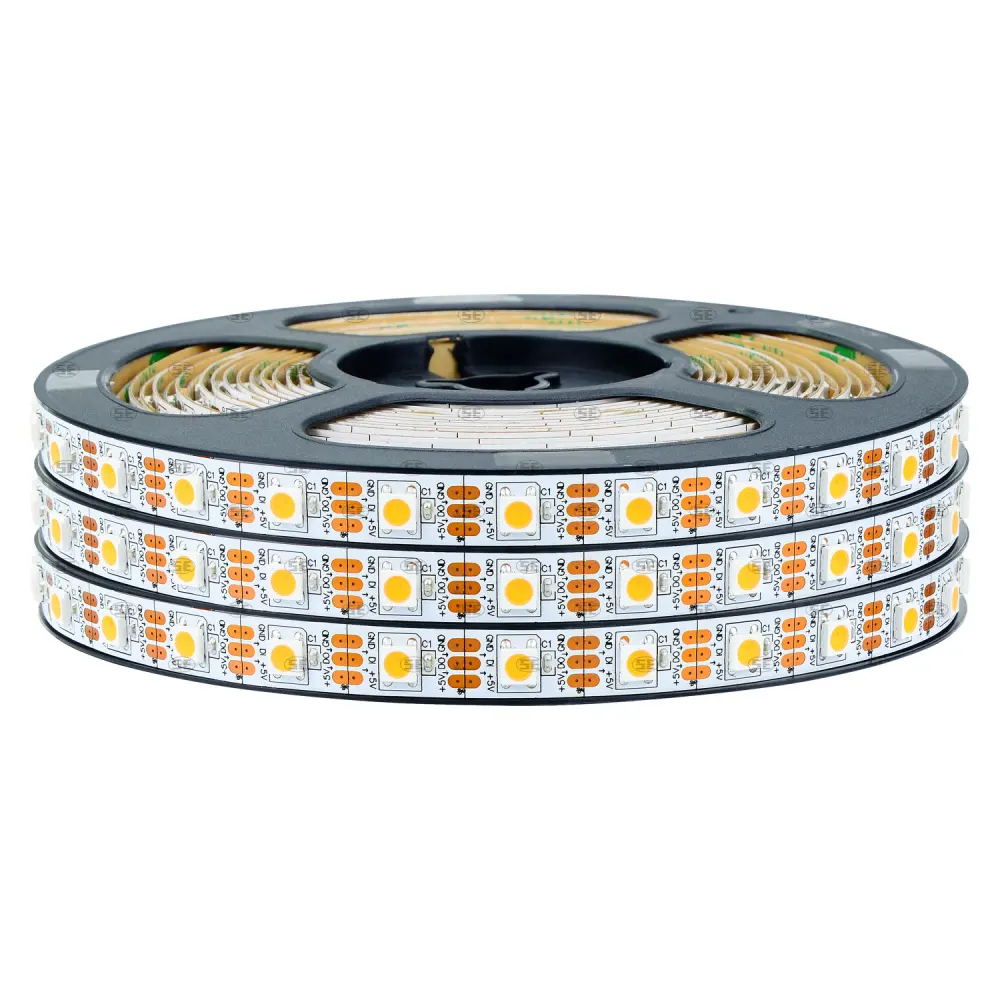
An addressable LED strip is a flexible strip of LEDs that allows you to control each LED or a small group of LEDs separately. It has tiny control chips, called ICs, that receive signals from a controller. As a result, different parts of the strip appear in different colors simultaneously.

What makes addressable LED strips stand out from regular ones is their moving, changing, and colorful lighting effects. In regular LED strips, you usually control all the LEDs together. If you select blue, the whole strip will turn blue. But an addressable strip works differently. It has tiny control circuits called integrated circuits (ICs).
These ICs help the controller communicate with separate LEDs. As a result, one section can become blue, another can be red, and another can be green, and so on. You can even make different colors move along the strip. This extra control is what makes addressable LED strip lights more than basic lights.
How Does an Addressable LED Strip Work?
The working of a programmable LED strip is very straightforward. It uses parts like LEDs, tiny control chips, a power supply, and a controller. Each of these parts works together to create different lighting effects. How? First of all, the power supply gives the strip the electricity it needs. Inside the strip, there are small integrated circuits (ICs). These ICs act as tiny traffic controllers for the LEDs.
It receives data from the controller and determines which instructions belong to it. Suppose the controller sends a command saying that one pixel should be red. In that case, the IC passes that information to the LED, causing it to emit red light. But it is also possible that the next pixel receives a different instruction. So it will produce any other color, like blue or green light instead.
However, what’s interesting about addressable LED strips is how signals travel through them. The controller sends data to the first controllable LED or pixel. That pixel takes the information meant for itself and passes the remaining information to the next pixel. The same process continues along the strip. This allows many pixels to be controlled through a single data signal.
The controller sends new instructions very quickly. So the colors appear to move, fade, chase, or change in smooth patterns. For example, there is a strip with 10 addressable pixels. The controller tells pixel 1 to glow red, pixel 2 to glow orange, pixel 3 to glow yellow, and so on. A moment later, it will change all those instructions and move the colors one position forward. To your eyes, it will look like a wave of light traveling along the strip.
What Is a Pixel in an Addressable LED Strip?
In the section above, I discussed the pixels on the addressable LED strips. But what is a pixel? Actually, a pixel in an addressable LED strip is the smallest section of the strip. This part is what can be controlled separately and gives an addressable LED strip its ability to create lighting effects.
In simple terms, it is a small unit that receives instructions directly from the controller. But remember that the number of LEDs and the number of pixels are not always the same. One pixel may contain one LED, several LEDs, or an LED group controlled by one IC. For example, there is an addressable LED strip with 60 LEDs per meter.
You most probably think that all 60 LEDs will show different colors because the strip has 60 LEDs. But that is not always the truth. If one IC controls three LEDs, those three LEDs will function as one pixel. They will normally receive the same instructions for color and brightness. In this case, 60 LEDs will provide 20 individually controlled pixels. So when you are buying addressable LED strips, check both the LED density and the pixel density.
Some Common Types of Addressable LED Strips
Now you have the basic know-how on addressable LED strips. Right? Next, you must know that these LED strip lights come in different types. Those types vary in colors, voltages, and control systems. Let’s discuss those types and their specifications so you can choose the right one.
1- RGB Addressable LED Strip
The first and most common type is RGB addressable LED strips. RGB stands for Red, Green, and Blue, the three basic colors used by LEDs. It also mixes these three colors to create many other colors. The main benefit of RGB LED strip lights is the freedom they offer in color. For example, the first part of the strip glows red, the middle shows purple, and the last part shines blue. You can also make a single color move from one end to the other to create a smooth rainbow effect. They are often used in gaming rooms, signs, decorative lighting, stage setups, displays, and DIY projects.
2- RGBW Addressable LED Strip
The second type is an RGBW addressable LED strip that takes the idea of an RGB strip. However, it takes one step further by adding a dedicated white LED. The letters RGBW stand for Red, Green, Blue, and White. The red, green, and blue LEDs create colorful effects, while the white LED produces white light. This gives the strip two useful abilities. First, it creates bright colors. Secondly, it provides more natural-looking white light when you don’t need decorative effects. For this reason, you can use them in room lighting, cabinets, displays, shops, events, gaming areas, and decorative projects.
3- Single-Signal Addressable LED Strip
A single-signal addressable LED strip is another type of digital LED strip that uses one data signal to control its pixels. The controller sends lighting instructions through this signal. The LEDs read those instructions one after another, not simultaneously. This tells each pixel what color and brightness to display. The first LED receives the message meant for it. After that, it follows the instruction and passes the remaining message to the next LED. The next LED does the same thing. This process continues until the last LED. However, one shortcoming of these lights is that the data signal depends on each pixel passing information to the next. If one pixel or connection fails, the LEDs after that point will also stop receiving the signal.
4- Dual-Signal Addressable LED Strip
Dual-signal addressable LED strips use two signal lines to communicate with the LEDs. This means they don’t rely on a single signal line. These signals help the controller send and manage lighting instructions along the strip. Here, the extra line provides an extra path or backup method. So a problem with one pixel is less likely to affect the rest of the strip. This makes dual-signal strips a choice for longer installations, displays, stage lighting, and signs.
5- DMX512 Addressable LED Strip
DMX512 addressable LED strip can be controlled via the DMX512 lighting control system. DMX512 is a common lighting control system that supports up to 512 control channels within a single DMX universe. So with this controller, you can tell different parts of the LED strip what color and brightness to show. For example, you use this type at a stage in a show. You may want the first strip to glow blue, the second to turn red, and the third to slowly cycle through several colors. A DMX512 system will help you control these lights from a single location. These LED strips are best for concerts, theaters, stages, clubs, events, large signs, and architectural lighting.
What Power Supply Does an Addressable LED Strip Need?
The power supply provides electricity to the LEDs. Without enough power, the strip will not light properly or will become dim. So an addressable LED strip needs a power supply that gives it the right voltage and enough power to run. Generally, LED strips work with 5V, 12V, or 24V.
However, you also need to know how much power the entire strip will use. This mainly depends on the strip type and length. For example, if a strip uses 12 watts per meter and you need 5 meters, you will need at least 60 watts. A better approach is to choose a power supply with extra capacity and avoid running strips at full capacity all the time.
Can You Cut Addressable LED Strips?
Yes, addressable LED strips can be cut into shorter pieces. This feature makes them easier to fit in different congested places, ceilings, and shelves. But interestingly, you cannot cut these strips anywhere. You need to cut them at the marked cutting points. These marks are shown as small copper pads or a line printed on the strip.

If you cut them outside these marks, the circuit can be damaged. There is one more thing that you should keep in mind. When you cut an addressable strip, the new piece still needs the right power and data connections to work. The direction of the data signal also matters for this separate piece. Most strips have arrows or markings that show which way the signal should travel. If you connect the piece in the wrong direction, the LEDs will not respond to the controller.
Common Applications
Addressable LED strips are useful in many different places. They are not just meant for simple decoration. Their ability to change colors and create moving effects makes them a good choice when ordinary lighting feels too boring. Let’s look at the common areas where addressable LED strips actually perform.
| Application | Common Use |
|---|---|
| Home Decoration | Ceilings, walls, shelves, and cabinets |
| Gaming | PCs, desks, and gaming rooms |
| Signage | Animated signs and displays |
| Stage Lighting | Concerts, shows, and events |
| Architecture | Buildings, stairs, and ceilings |
| Retail | Product displays and shelves |
| Events | Parties and decorative lighting |
| DIY Projects | Custom and programmable lighting |
Conclusion
Addressable LED strip lights are among the most effective ways to turn a light into an elegant one with various color effects. Unlike regular LED strips, these strips control different LEDs or sections separately. This means you can create colorful patterns, moving effects, smooth color changes, and many other lighting styles. In this guide, I have discussed everything you need to know about addressable LED strip lights. However, choosing the right one is very crucial. You should check a few basic things, such as voltage, LED and pixel count, IC type, controller, and power supply. You should also consider where you will use the strip and what effect you want.