
Stage lighting is one of the most essential elements of any live performance. Lights help people at the concert or theater see clearly and feel the emotion of the moment. Right? But when you start finding lighting options for the stage, you will notice there are different types of stage lights.
Each of those lights works and illuminates the place differently. That’s why choosing the proper lighting is crucial to making the event memorable. But if you are a beginner, it can be very easy to get confused about the correct type of stage light for your project. To help you out, this guide explains various types of stage lights, their uses, and how they work. So let’s get started.

Basic Purposes of Stage Lighting
Before we explore different types of stage lighting, let’s first discuss why stage lighting matters.
- Visibility: First, visibility is the most basic purpose of stage lighting. Without lighting, the audience cannot see the performers, objects, or actions on stage. Also, without proper lighting, faces, movements, and expressions can be hard to notice. All this can ruin the event’s real excitement.
- Mood & Atmosphere: Lighting plays a key role in creating mood and atmosphere on stage. How? Actually, stage lights come in various colors, brightness levels, and lighting stages. This makes the same stage look entirely different.
- Focus: Stage lighting helps guide the audience’s attention to the most crucial part of the performance. When a spotlight shines on a performer, it tells the audience where to look. This reduces the distraction from other less important areas.
- Style & Aesthetics: Style and aesthetics are all about how the stage looks overall. Proper lighting adds beauty, depth, and visual interest to a performance. It can make the stage appear bigger, more colorful, and more professional. As a result, the event feels more attractive overall.
Different Types of Stage Lights
Stage lights come in many shapes and styles, and each serves a specific purpose. Now that you understand the purpose of stage lighting, let’s discuss the different types.
1- Floodlights
The first and most common stage light type is floodlights. As the name suggests, these lights “flood” a large area with light. Floodlights do not produce a sharp, focused beam. That’s why they cover a wide area without creating clear edges or dark spots. This means they are not just to highlight one performer or object on the stage.
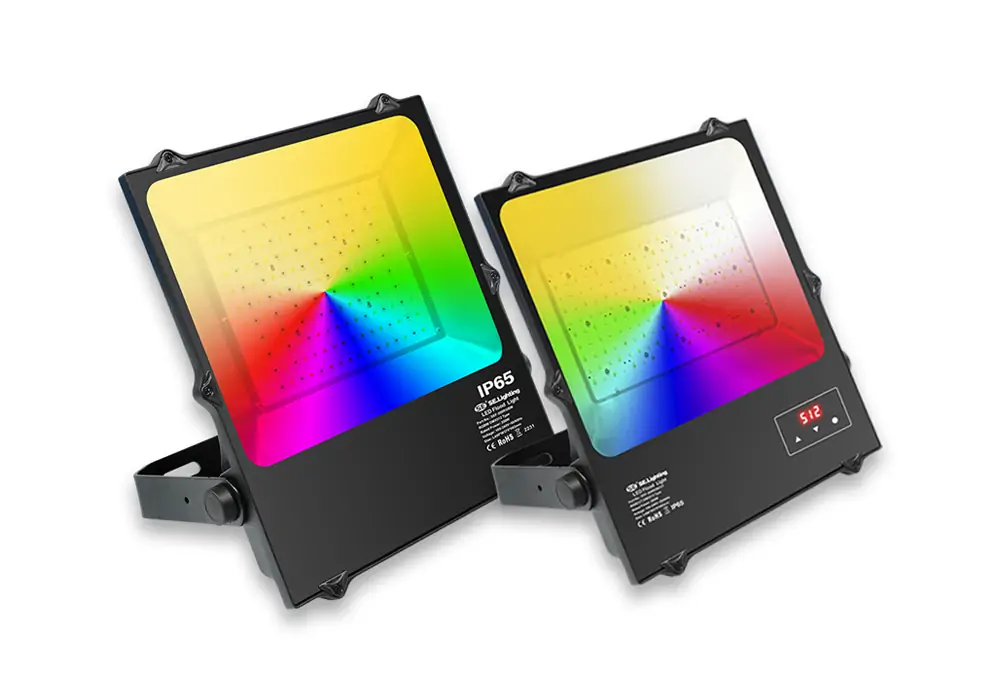
Instead, they provide general brightness to prevent the stage from looking empty. Also, the floodlights are straightforward to use. You usually need to aim them toward the stage, turn them on, and they do their job. There is no need for complex adjustments or precise aiming. That’s why you will often find floodlights for large outdoor stages.
2- Spotlights
Spotlights are stage lights that produce a focused, intense beam. That’s why these stage lights are mainly used to light a specific area. Unlike floodlights, spotlights are designed to draw attention to a single point on the stage. When a spotlight is used, it clearly indicates where to look.
For example, during a solo performance or speech, a spotlight is used to focus on the main person, while the rest of the stage is dimmer. Additionally, spotlights are stronger than general lights. Therefore, they can clearly illuminate a performer even from a distance. However, spotlights provide more controlled lighting, so you have to adjust them to make the light wider or narrower.
3- Fresnel Lights
Fresnel lights are another popular type of stage lights you will find. They are known for producing a soft, smooth light that blends well with other stage lights. How? Actually, the Fresnel light shines on the stage. The light is bright in the center. Then it slowly becomes less bright. And finally, it blends into darkness.
So there is no sharp line where the light suddenly stops. Moreover, Fresnel lights allow you to adjust the size of the light beam. You have to move the lamp inside the fixture, and the beam will widen or narrow accordingly. Also, the Fresnel stage lights work well with color filters or gels. You can apply a color gel to these stage lights to create a specific lighting mood without spending extra power.
4- Ellipsoidal Reflector Spotlights (ERS)
Ellipsoidal Reflector Spotlights (ERS), or profile lights, are specialized stage lights. These are used when you want precise control over where the light goes. Unlike floodlights, which spread light in all directions, ERS lights produce a sharp, focused beam. That’s why they are perfect for highlighting specific performers, objects, or areas on stage.
Moreover, the ERS lights feature gobos. These are small patterns or shapes that you can place inside the ERS light. The ERS will project these shapes like logos, leaves, or animations onto the stage. That’s why these stage lights are also known as “designer lights” for their dramatic effects and sharp focus.
5- PAR Lights (Parabolic Aluminized Reflector)
PAR lights, which stand for Parabolic Aluminized Reflector, are one of the most popular and widely used stage lights. You will often see these stage lights in concerts, live shows, and touring outdoor events. PAR lights are known for producing strong, intense beams that cover a large area. However, like ERS lights, the beam shape is not very flexible. It is usually round or oval and remains consistent, providing strong visibility. But you can still create different color effects by applying colored gel in front of the light.
6- Moving Head Lights
Moving Head Lights are another advanced and highly versatile stage light. These lights can move, rotate, and change colors automatically during a performance. It means the head-moving lights don’t have a fixed fixture but can tilt, pan, and rotate automatically. This makes them ideal for highlighting several spots on the stage without requiring extra adjustments.
Another great feature of moving head lights is that they have built-in color wheels or LED technology. As a result, you can create beams, patterns, strobes, and other dynamic lighting effects on stage. Also, you don’t have to worry about the strength of these lights. They provide strong and intense light that covers a large area.
7- Wash Lights
As the name suggests, the wash lights wash the stage with smooth, even layers of light. That’s why they spread light evenly over a large area. This even spread helps make sure no part of the stage is too dark or too bright. Basically, these wash lights have diffusers or lenses that soften the beam.
Without a diffuser, the light might be harsh, creating sharp shadows and dark spots. Furthermore, nowadays, modern wash lights often use LEDs instead of old incandescent bulbs. The LED bulbs not only save you money on electricity but also help create and combine several colors at once.
8- Strip Lights
Strip lights, sometimes called cyc lights or battens, are long, narrow stage lights. These stage lights contain multiple bulbs or LEDs arranged in a line. So instead of focusing on a single spot, strip lights cover a large but horizontal area at once. You can use them to illuminate curtains, walls, or backdrops. Another thing that I like most about the strip lights is that they have multiple bulbs or LEDs.
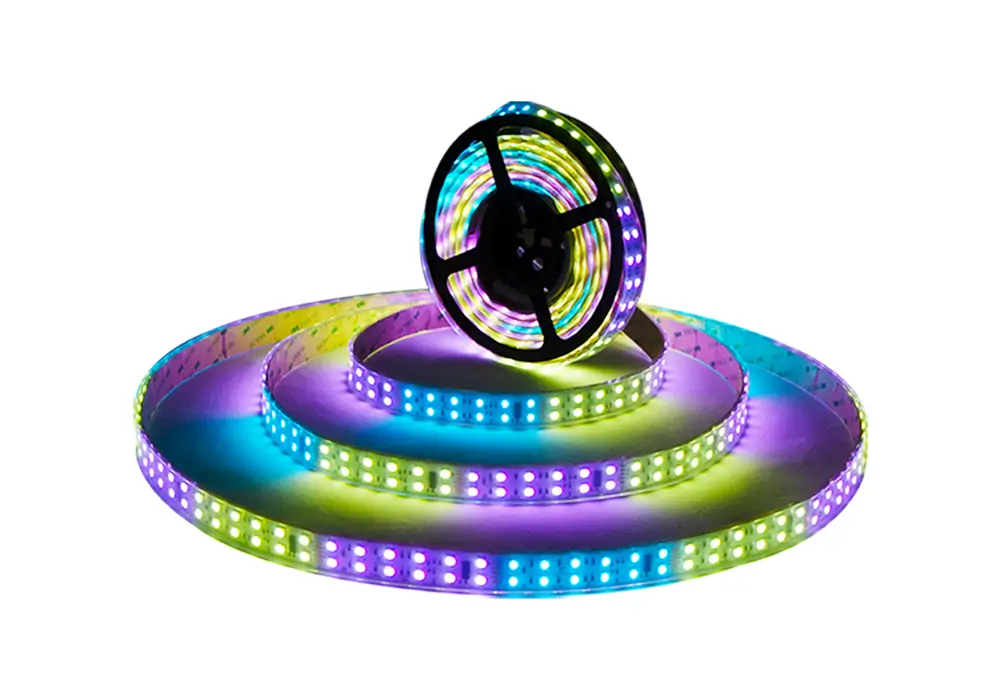
These bulbs work together to produce smooth, even lighting. As a result, there is no chance of dark spots between the bulbs, which can affect audience attention. The strip lights now also come with LED technology. It means you can fully control individual strip lights and mix different lighting colors on the stage.
9- Follow Spotlights
Follow spotlights are special stage lights used to track performers as they move across the stage. These lights follow the main performer wherever he moves; that’s why they are called that. Follow spotlights usually produce a very bright, narrow beam that can clearly highlight a performer even on a large stage.
But how do the following spotlights work? Actually, these lights stand at the back of the venue or on a raised platform. To focus on the main person on stage, the old version of the following spotlight needed a manual operator who moved it by hand. However, modern follow spotlights are now motorized and automated, which move on their own.
How to Choose the Right Stage Lights: Key Factors to Consider
Choosing the right stage lights is very important for any performance. Why? Because the right lighting enhances the mood and highlights performers. On the flip side, a wrong stage light can make the stage look dull. To help you make an informed selection of stage lights, here are the key factors you should consider.
- Type of Event: First, understand what kind of event you need stage lights for. For example, if you are arranging the concert, moving heads and PAR lights are best. However, for theaters, spotlights, ERS lights, and Fresnel lights work perfectly.
- Stage Size & Layout: After that, consider the stage’s size and layout for which you need lights. For small stages, Fresnel or wash lights are ideal. Why? Because they create even and smooth lighting. However, for large stages, moving head lights, PAR lights, and follow spotlights are best suited.
- Desired Lighting Effects: As you can see, all the stage lights I discussed offer different lighting effects. So you must have a specific lighting effect in mind. For instance, if you want a soft and natural effect, use Fresnel lights or wash lights. However, focused attention spotlights or ERS lights are best. For dynamic or moving effects, moving head lights and LED lights are the best option.
- Budget & Cost: Lastly, you also have to consider your budget. Actually, the stage lights range from cost-effective to premium options. For example, moving headlights and LED systems are expensive but offer flexibility and effects. However, Fresnel lights and PAR lights are budget-friendly options.
Conclusion
Let’s conclude: Stage lighting is now more than just brightening a stage. It’s all about creating dynamic effects and making the event enjoyable and still visible. In the market, you will find several types of stage lights. In this article, I have discussed some of the best-known stage lights that excel in both usability and lighting effects.
For example, some lights, like floodlights, cover a large area over the stage. However, spotlights and follow spotlights highlight performers. With LED technology, all these lights can be made more dynamic and more cost-effective in terms of electricity use. Choosing the right lights among these depends on the nature of your event, the stage size, and the lighting effect you want. So consider all these necessary factors and make your stage beautiful, bright, and full of life.