
You will agree with me that lighting can instantly transform any space with its elegance. With proper lighting, your home looks and feels safe even after sunset. But when it comes to landscape lighting, you might wonder: How many lumens do I need for landscape lighting? It is very important to know that lumens decide how bright your landscape will be.
Also, the right lumen lighting helps you save on additional energy consumption. But if you are just starting landscape lighting, choosing the right lumens might feel tricky. But worry not! In this guide, I will explain everything about lumens and how much you need for your landscape. So let’s get started.
Why Does Lumens Matter in Landscape Lighting?
Lumen is actually a measure of the brightness of a light. The higher the lumen, the brighter the light will be. But the right amount of lighting matters a lot for landscapes. Even if you choose a beautiful light but the wrong lumen, it will affect the entire look. But that’s not all! Let’s discuss the reasons why lumens are crucial for landscape lighting.
- Better Safety: One major reason lumens matter is safety. In areas such as pathways, stairs, patios, and driveways, there must be sufficient lighting for people to see. If the brightness is too low, it becomes hard to see steps or obstacles, and you may fall.
- More Beautiful Landscape: The right lumen of landscape lighting also affects its look. If there is sufficient light at night, it will create a relaxing environment. Also, the right lumen highlights the beautiful features of your landscape.
- Balanced Brightness: Every outdoor area needs a different amount of light. Right? Some spaces need gentle lighting while others need stronger illumination. So if there is the same lumen for landscape lighting, it will feel uneven or uncomfortable.
- Lower Energy Waste: Lastly, the right brightness level for the landscape reduces energy use. How? Actually, every corner in your landscape needs a different brightness level. If you use the same lumens, you lose energy. But the right level of brightness helps you reduce energy consumption and save on your electricity bill.
How Many Lumens Do I Need for Landscape Lighting?
The landscape in your home is not a single place. It usually includes pathways, driveways, garden beds, and trees. But the important part is that you need to know that not every area needs the same brightness. If you use one fixed level of lumens everywhere in your landscape, the result will be uneven lighting. Hence, to help you out, here I will discuss the estimated lumen level for each space in your landscape.
1- Pathway Lighting
The first, most important part of the landscape is the pathway. Proper lighting plays a crucial role there, helping you walk safely at night. Generally, pathway lights do not need to be extremely bright. Because brightness can also feel harsh on the eyes, it creates a sense of comfort.

That’s why lighting between 100 and 200 lumens per fixture is enough for pathways. This level of brightness helps people clearly see the path, steps, edges, or small obstacles. But remember, the style and size of your landscape pathways also affect the lumens. Suppose you have a narrow garden path; it will require low brightness for a soft glow.
2- Garden Bed Lighting
Garden bed lighting is all about highlighting the beauty of flowers, plants, and shrubs in your landscape. Many people think brighter lights will make their garden look better, but that is not always true. Very strong lighting can actually ruin the relaxing atmosphere and natural beauty of plants. So, unlike security lights, these lights are not meant to be very bright.
Instead, their purpose is to create a soft glow that enhances the landscape’s beauty. That’s why the suitable lumens for a garden bed are about 50 to 150 lumens per fixture. This soft brightness gives your garden a more elegant look. However, you can choose a slightly different lumen count depending on the types of plants in your garden.
3- Tree & Accent Lighting
Tree and accent lighting actually draw attention to special features in your outdoor space. In accent lighting, you can light up trees, fountains, statues, stone walls, or any area you want people to notice at night. As these features must be highlighted, they usually require around 100 to 400 lumens per fixture.
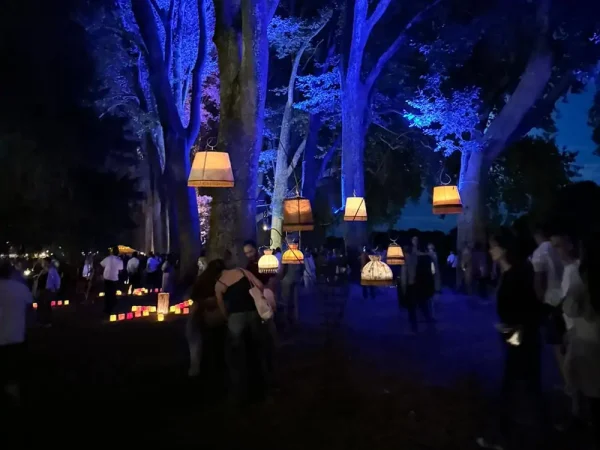
However, the exact brightness level for the tree and accent depends on the size and height of the object you are trying to highlight. For example, if you want to highlight smaller trees or shrubs, lower lumens are often enough. However, for large trees with thick trunks, you will need slightly more lumens. You can also use multiple lights with varying lumens for one large tree to create a fuller effect.
4- House Exterior or Wall Lighting
Your house exterior also comes in landscape. Adding lights here enhances your home’s appearance and ensures visibility around the property. Usually, you can add exterior lighting to entryways, garage doors, patios, fences, and exterior walls. At all these places, light plays a different role.

For example, lights near the front door help you safely enter the home at night. Patio and sitting area lights help create a relaxing environment where you can comfortably spend time in the evening. In most situations, exterior wall lighting usually needs around 50 to 300 lumens per fixture. But if you are using decorative wall lights, you will need lower lumens for a soft glow.
5- For Security Lighting
Security lighting is one of the brightest types of landscape lighting. Why? The main purpose of the lights there is to ensure safety and protection. For example, they reduce dark areas where people may not see movement, obstacles, or unwanted activity. For security, you can add lights in outdoor areas such as entrances, backyards, garages, driveways, and gates.
Therefore, security lighting usually needs around 700 to 1,300 lumens or more. But if you have a very large landscape, you can increase the lumens even more. Brighter lights will help you feel safer and make it easier to monitor different areas of the landscape at night. However, keep in mind that this does not mean every security light should be extremely powerful. Too much brightness will create glare and deep shadows. This, as a result, sometimes makes visibility worse instead of better.
6- For Driveway Lighting
Driveway lighting in the landscape is a bit different from other landscape lighting as it serves a very practical purpose. It is not just for decoration, but it is mainly there to guide vehicles safely and make parking easier at night. In simple words, a driveway is a moving space, so the right brightness matters a lot.
For most homes, driveway lighting works best at 200 to 800 lumens per fixture. But here is the thing: instead of only thinking about brightness, you should also consider coverage. Remember, driveways also do not need to be too bright. Why? Too harsh lighting can distract the driver and cause discomfort. That’s why lumens must be enough just to handle moving headlights and vehicle shadows.
Factors That Affect How Many Lumens You Need for Landscape Lighting
As you can see above, there is no single fixed lumen number for a landscape. It changes with the outdoor space size, style, and purpose. Besides this, several other factors can affect the lumens needed for landscape lighting.
- Size of Area: First, the size of your landscape is the most important thing. If you have a small garden corner or a narrow pathway, you will not need much light because the area is limited. However, when the landscape space is large, such as a wide backyard or a long driveway, you will need more lumens.
- Lighting Purpose: The purpose of lighting also changes how many lumens you should use. For example, if you need decorative lighting, you have to choose a softer brightness with low lumens. On the other hand, for security or driveway lighting, you will need much higher brightness.
- Surface Color in Landscape: The color of your landscape’s surfaces also affects the lumen needed. How? Suppose you have light-colored surfaces, such as white walls, light stone, or pale concrete; they reflect light. So, for such cases, you have to use low-lumen lighting. However, dark surfaces like black asphalt, dark brick, or dense greenery absorb more light. As a result, you will need more lumens to enhance visibility.
- Surrounding Light Near Landscape: Lastly, the amount of natural or nearby artificial light also matters. If your home is in a very dark area with no LED streetlights, you may need higher lumens to see clearly. But if there are streetlights or nearby buildings already providing light, you can use lower lumens.
Conclusion
The definition of lighting has changed in this modern age. Now, lighting is all about enhancing the beauty of a space and improving visibility. But when choosing lighting for your home’s landscape, one important factor is lumens. Lumens are actually the brightness level of a light. If you don’t choose the right lumens for your landscape lighting, the entire space can look messy.
That’s why I have discussed different lumen levels for landscape lighting to help you out. As you can see, different areas of the landscape require different luminance levels. What really matters is using the right amount of brightness in the right place. Before you make the final decision, consider the lighting around you, the area’s size, and the lighting’s purpose.