
Different lights are used to make the spaces look unique and stylish. However, outdoor lighting is incomplete without using wall-washing and wall-grazing techniques. These methods offer an effective way to enhance the visual appeal of outdoor spaces. However, many people debate on wall washing vs wall grazing outdoor lighting techniques.
In fact, few people know exactly what these two lighting techniques are used for. Remember, wall washing is about spreading light evenly across walls. Wall grazing is different, as it involves mounting lights at a sharp angle to highlight the walls’ curves and textures. In this article, I will discuss these two lighting techniques in detail.

What are Wall Washing & Wall Grazing?
Wall washing is a technique that evenly illuminates the wall. A wall with this lighting technique looks flooded with light and evenly brighter. However, it does not highlight the texture or imperfection of the walls. Wall grazing is a technique that is all about putting light on walls at sharp angles from a shorter distance. It highlights the wall’s texture, imperfections, and other designs.

These lighting techniques primarily differ in how they place and position light. For example, wall washing involves placing lights at some distance from the wall. The light emits onto the wall at a less sharp angle and with a wider beam angle. This light, with a wider beam angle, will illuminate the walls perfectly and evenly.
Since light spreads and covers a larger area, it does not reveal small details. The imperfections, curves, or design on the wall remain hidden due to less-sharp lighting. On the other hand, wall grazing techniques involve placing light close to the walls. When light is positioned near the wall, it emits the light with sharper angles on the wall.
In other words, the light beam with a narrower angle illuminates the walls. Since the light beam is narrower, it illuminates only the area of the wall. However, light is more focused and creates shadows due to sharper angles. This light, therefore, highlights texture, curved design, or any imperfections on the walls.
Interestingly, the light is sharp but only focuses on a smaller area, so most of the walls remain darker. As a result, people use grazing lights to highlight only specific bricks or wall designs, while other portions remain hidden. Wall washing makes the space look uniform and brighter. On the flip side, wall grazing emphasizes contrast and highlights textures.
Wall Washing VS Wall Grazing: What’s the Difference?
One key question is: Which one to use, wall washing or wall grazing? Well, both of these are excellent architectural lighting techniques. This means they both perform best at illuminating outdoor spaces, making them look more visually attractive. However, their selection can be made if you understand the differences between wall washing and grazing.
In this section, I will discuss key differences between the two lighting techniques.
1- Light Distribution & Beam Angle of Light
Wall washing involves positioning the light at some distance from the wall. As a result, light spreads out to the wall at a wider angle. So light spread across the walls with better distribution. In simple words, wall washing ensures better light distribution. This illuminates a large portion of the wall, making the space uniformly brighter
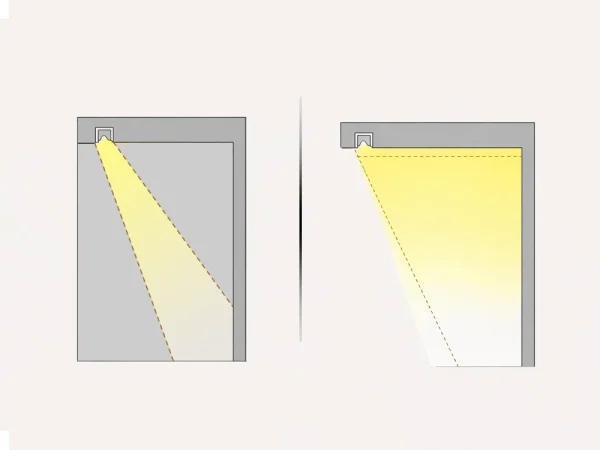
On the other hand, wall grazing involves placing the light close to the wall, which emits light at sharper angles. This, as a result, focuses on a smaller area of the wall, illuminating a smaller portion of it. Since the wall lights are mounted at a sharp angle, they cast shadows and highlight texture, curves, and imperfections. At a steeper light angle, the light distribution is reduced, keeping it confined to a specific area.
2- Handling of Wall Imperfections
As I said, wall washing involves putting lights at less sharp angles on the walls. So these lights are distributed across the surface, illuminating more areas. Since lights are distributed across more areas, this means it does not focus on specific areas. As a result, it does not highlight imperfections, cracks, or bumps present on the walls. In fact, people use this technique when their outdoor walls are old and have cracks.
This technique perfectly hides those imperfections of the walls. In contrast, the wall-grazing technique shows imperfections in the walls. How? That’s because light in this technique focuses on smaller areas. More light hitting a specific area highlights its bumps, cracks, and imperfections. People use wall grazing to showcase unique wall designs. I recommend wall washing if you have old walls with defects, imperfections, or cracks.
3- Area Coverage & Distance of Light from the Wall
The wall-washing technique is better because it provides greater coverage. Interestingly, both area coverage and the distance of the light source from the walls are closely related. Wall-washing techniques involve positioning the light source at a distance. Therefore, the lights go on the wall with a wider angle and cover a larger area. In the wall-grazing technique, the light source is placed close to the walls. Light reaches the wall at a sharper, narrower angle. So it covers only small portions of the wall, resulting in a smaller coverage area with this technique.

4- Overall Wall Appearance & Suitability for Wall Types
Wall-washing techniques create a balanced visual appeal for the wall. It focuses on creating uniform brightness on the walls. This results in making the space look brighter and well-lit. It is best suited for illuminating walls with smooth surfaces. This technique becomes even more useful if the wall is old or has defects such as chipped paint, cracks, or bumps.
On the contrary, the wall grazing technique is all about creating shadows and highlights on the walls and focusing on specific areas. This lighting technique is best for highlighting something on the walls. This can be a custom design, bricks, wood, or any other pattern present on the wall. This technique may not work well on older walls with defects.
5- Surface Detail & Shadows
Wall washing and wall grazing differ in the surface detailing and shadow production they produce. In wall washing, light falls onto the walls at a wider angle. So it distributes more across the wall and produces a smooth view. There is less shadow production, and details on the wall are not prominent. On the other hand, wall grazing is unique; it involves placing light sources close to the wall.
The light source illuminates the wall at a sharper angle, creating sharp shadows. Additionally, more light was focused on a smaller area of the wall, resulting in more detail. If you don’t want to show the wall’s design or imperfections, use a wall-washing technique. Why? That’s because this technique does not show surface details. Conversely, you should choose wall grazing if you want to highlight the wall’s details.
6- Brightness & Contrast
The wall washing technique is generally considered best for even brightness. The part of the wall illuminated by this lighting offers the same level of visibility. That’s because of the wider angle of the lights and the distant positioning of the wall washer light. However, you won’t achieve excellent contrast with the wall-washing technique. In contrast, wall grazing is an excellent option when you need more contrast. Better contrast ensures everything on the walls, structures, designs, and style remains visible. This contrast is very useful in highlighting every small detail of the walls.
7- Installation Complexity & Fixture Spacing Requirements
The wall washing technique is easier to use. You can easily install the light at some distance from the wall. Additionally, there is no requirement for a precise angle when positioning the light. Above all, only a few lights will easily distribute the light across the wall. On the other hand, using wall grazing techniques is a bit more complex. Why?
The reason is that you’ll have to position lights close together. Additionally, you’ll need to maintain a precise and sharp angle. This will ensure that slight goes on the walls, creating an angle and highlighting the focus area. If the angle of the lights is not carefully adjusted, you may not achieve the desired results.
When to Choose the Wall Washing Technique?
The wall washing technique is very useful for outdoor architectural lighting. However, many might get confused when it comes to choosing these techniques. Here is when you should consider the wall washing technique:
- Choose wall washing if you want to illuminate more space on the wall
- If you want to hide the imperfection or defect on the surface of the wall
- Choose wall washing for more balanced, uniform, brighter lighting.
When to Choose the Wall Grazing Technique?
Wall grazing is the opposite of wall washing. This makes the selection of wall grazing and washing different.
- Choose wall grazing if you want more contrast than brightness
- You should choose wall grazing if you want to highlight the texture or design of the wall
- Choose it if you prefer more focus and sharper lighting on the wall, resulting in stronger shadows.
- I recommend wall grazing if you don’t want to illuminate the whole wall. This technique is suitable for highlighting small portions due to lower light distribution.
Common Use Case of Wall Washing & Wall Grazing Technique
Both wall washing and wall grazing are lighting techniques. They help create different light effects on the wall. In this way, they create a unique visual appeal, making the space look more distinctive. Wall washing is best when you aim to create evenly brighter lighting. On the other hand, wall grazing is suitable for more focused lights that create shadows.
Here is the table showing the application of both wall washing and wall grazing:
| Wall Washing Applications | Wall Grazing Applications |
|---|---|
| Offices & workspaces | Brick feature walls |
| Art galleries & museums | Stone cladding walls |
| Hotel lobbies | Restaurant accent walls |
| Living room plain walls | Textured TV back walls |
| Hallways & corridors | Exterior façade textures |
| Ceilings & wide surfaces | Decorative columns & pillars |
Conclusion
In short, wall washing and wall grazing are two important techniques. They help show unique visual effects on the wall, making them stand out. Wall washing is more like illuminating the wall evenly with smooth brightness. This technique is useful in hiding defects or cracks present on the wall. In contrast, the wall grazing is useful for highlighting unique objects, designs, or styles present on the walls. In this technique, the light source is positioned close to the wall. It emits light with a sharp angle at the wall, creating a unique style and offering contrast. In this article, I have discussed the basics of both wall washing and grazing techniques.