
Strip lights are widely used in both indoor and outdoor settings. They illuminate and improve the aesthetics of the space. Have you ever seen a series of lights on the walls of buildings? These are the strip lights and give the space a modern vibe. There are different types of strip lights available. However, this article offers a complete guide on 48V LED strips.
In the past, people had the option of 12V and 24V LED strips. However, these lights had serious issues with voltage drops. As a result, the strip lights were not ideal in terms of their brightness and illumination. However, 48V lights offer a perfect solution to the voltage drop. In this article, we will discuss everything about 48V LED strip lights. So, let’s begin!
What Are 48V LED Strip Lights?
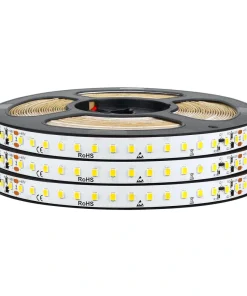
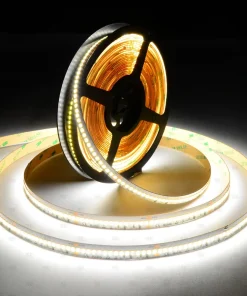
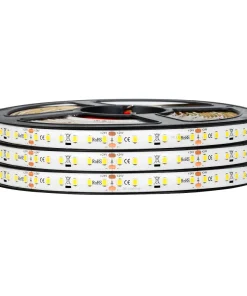
48V LED strip lights come with long tape-like circuit boards. On this circuit board, small light-emitting diodes (LEDs) are mounted. These diodes emit light when DC flows through them. The 48V LED strip only works with 48V and offers balanced lighting from all the diodes present on the circuit board.

48V LED strip lights are highly flexible, adjustable and can be installed in very tight spaces. In fact, you can even bend them to create different designs. The working of these 48V strip lights is similar to that of 12V or 24V strip lights. However, due to higher voltage (48V), they offer better brightness and performance.
One 48V LED strip light can have multiple diodes. They work only on low-voltage direct current. The LEDs are mounted on the circuit board and connected in series. Now the DC flows through these small light-emitting diodes (LEDs). When current flows, those small LEDs emit light by using energy.
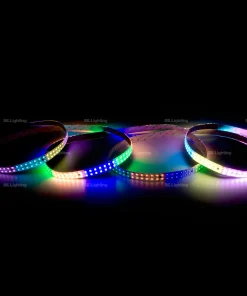
48V LED strip lights come in various types. Some of those lights offer only bright lights with varying temperatures. However, some strips provide different colors. Those include RGBW strip lights and RGB strip lights. These lights give red, blue, green, and white colors. Some of those strip lights also create dynamic color effects.
The usability of these 48V LED strip lights is very diverse. They can be used in both outdoor and indoor settings. Some people use it on their ceilings, furniture, and cabinets. Moreover, their dynamic color effect makes them excellent architectural lights for large buildings. The use of these 48V LED strip lights is becoming more common due to the stable brightness they offer.

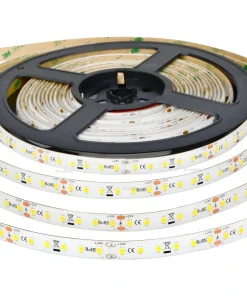

Key Features of 48V LED Strip Lights
The 48V LED strip lights have gained significant popularity. The reason behind their popularity is the features that these lights offer. In the section below, I’ll explain the key features of these 48V LED strip lights.
1- Low-Voltage DC for Safe Power Use
First, these strip lights operate using a low-voltage DC. It means that these lights pose no danger to the users. You can keep holding them when they are working, and you won’t feel any electric shock. This is due to their functionality using DC instead of AC. They don’t use typical household electricity (220V or 110V AC). This makes these 48V LED strip lights very safe to use and install.
2- Less Voltage Drop
These 48V LED strip lights have less voltage drop. In conventional 12V or 24V lights, voltage drop is a common issue. The voltage drop means that as electricity moves farther, the brightness of LED lights starts to decrease. For example, in a 12V strip with 10 LEDs, the first 3 to 4 LEDs will emit optimal light.
But the next LEDs will be dim and won’t emit the desired lights. However, 48V LED strip lights run on 48V DC. They generally don’t face voltage drop issues even if the strip has multiple LEDs running. Even if a voltage drop happens, it will be very small (often negligible). All the LEDs mounted on the strip will be equally bright and emit a decent amount of light.
3- Flexible Wiring & Easy Installation
48V LED strip lights are very powerful. As said above, the voltage drop is very minimal in these lights. So, all the LEDs mounted on these strips run smoothly without going dim. So you won’t have to provide any additional DC supply for running all LEDs. 48V DC in these strip lights will ensure the working of all the lights. No additional power supply, wiring, or connectors are needed when using 48V LED strip lights. This makes the installation sites neater. Using fewer wires makes their installation much easier.

4- Longer Continuous Runs
Smaller voltage strip lights cannot run multiple LEDs at a time. They experience a significant voltage drop when multiple LEDs operate simultaneously. However, these 48V LED strip lights can simultaneously brighten various LEDs. All those LEDs will emit the same level of light. In case of a small voltage, you’ll cut the strips, and then provide a more powerful power supply at specific positions.
These additional power supplies reduce voltage drops and ensure all the LEDs run. However, 48V LED strip lights will run all the LEDs connected in series. You won’t have to provide additional power supplies. This makes 48V LED strip lights a superior option to cheap, low-voltage strip lights. Many of these strips are designed with a constant current solution with IC. This further minimizes voltage drop and ensures uniform brightness across long runs.
5- Energy-Efficient Performance
These strip lights use high voltage (48V). Right? It means that these strips require a small amount of current to run those LEDs. Remember, the voltage and current are inversely proportional to each other. When lower current flows in strips, it means there is minimal to no loss of power. Remember, when the voltage is low, more current is needed by the strips.
More current flowing in the strip results in a loss of more power in the form of heat. Since these 48V LED strip lights operate on a lower current, the loss of power is minimal. As a result, a small amount of electricity is used during their operation. This makes 48V LED strip lights a cost-effective option that offers ideal performance.
Why Choose 48V LED Strip Lights Over 12V or 24V?
I highly recommend choosing 48V LED strip lights instead of 12V or 24V lights. The reason is that these 48V lights are very powerful. With few LEDs mounted, these strip lights don’t face any voltage drop issues. If there are more than 20 LEDs on these strip lights, the voltage drop will be minimal.

This small voltage drop is negligible and does not affect the brightness of LEDs. However, both 12V and 24V strip lights face severe voltage drop issues. These issues become even worse if more than 10 LEDs are mounted on the strip. The reason is that they work with lower voltages. Because of this, these strip lights can only power a limited number of LEDs.
Most LEDs on these low-voltage strips are very dim and don’t emit the desired light. Additionally, these lights consume very little electricity for their operation. If you use 12V or 24V strip lights, you’ll have multiple power supplies and wires. The use of numerous cables makes the lighting setup even more complex and expensive. However, 48V strip lights don’t require such power supplies.
If these strips have a large number of LEDs, you might need a few additional supplies. If LEDs are fewer in number, there won’t be a need for using supplies or extra wires. All the reasons indicate that the 48V LED strips are more powerful. I highly recommend prioritizing them instead of 12V or 24V lights. The initial higher cost of 48V is justified by its value.
Comparison Table of 12V, 24V and 48V Strip Lights
Here is a table showing why you should favor 48V strip lights over their counterparts:
| 12V LED Strip | 24V LED Strip | 48V LED Strip |
| Short runs (~5m) | Medium runs (~10m) | Long runs (20–100m) |
| High voltage drop | Medium voltage drop | Less voltage drop |
| Needs many power supplies | Needs several supplies | Fewer supplies needed |
| Uneven brightness | Better brightness | Even brightness |
| High current usage | Medium current usage | Low current, efficient |
Applications of 48V LED Strip Lights
48V LED strip lights have a wide range of applications. It is generally believed that these strips are only good options for outdoor spaces. This is wrong as they are equally good when used as decorative lights in indoor settings. Here are some key applications of these 48V LED strip lights:

- Industrial Use: 48V strip lights are preferred over 12V or 24V when it comes to industrial use. Different factories, warehouses, and shopping centers use them. They cover more distance and keep all the LEDs mounted on them brighter.
- Outdoor Lighting: 48V strip lights are popular in outdoor settings. They are used in gardens, patios, pathways, and entrances of buildings. Additionally, you’ll also see these strip lights outside of shopping malls.
- Architectural Lighting: As said above, 48V LED lights create smooth, balanced lighting. This makes them an ideal option for landscaping lighting. Some of these lights can also produce color effects, making them suitable for architectural lighting They improve the aesthetic appeal of spaces where they are used.
- Signage and Billboards: As I mentioned earlier, 48V LED strip lights come in various varieties. RGB and RGBW LED strip lights are used on signage and billboards. Their differences make the signage and billboards more prominent. People also use these lights to highlight the name & logo of their business.
- Furniture or Cabinet Lighting: These LED strip lights are also used as ceiling, furniture, or cabinet lights. People use these lights in such spaces due to their compact size. Additionally, they create a smooth accent, improving the visual appeal of spaces. These lights are also used on shelves to add illumination.
Conclusion
These 48V LED strip lights offer safety, efficiency, and ideal performance. In the past, people had to use lower-voltage strip lights. They were less efficient and needed multiple supplies to run all the LEDs mounted on them. However, these lights have transformed the lighting system. What I like about these strip lights is their compatibility with higher voltage.
This ensures they don’t face any sudden voltage drop issues. Additionally, these LED strip lights are very safe to use. The reason is that they use DC for their work instead of AC. When they are working, you can touch them and even hold them in your hands. You won’t get any electric shock, indicating their safety.